
Block Jointing Mortar
Block jointing mortar is a high‑performance premixed adhesive used to bond AAC blocks, concrete blocks, and similar masonry units with thin, strong joints. It replaces conventional sand–cement mortar and allows faster, cleaner construction with better dimensional accuracy and reduced material consumption.
Key features
High bond strength with thin 3 mm joints, creating a dense, rigid wall with minimal shrinkage and cracking.
Faster construction because no curing is required and mixes are ready for use with just water.
Reduced wastage due to better workability, easy application, and precise spreading, especially when used with a notched trowel.
Economical over the project life as it saves time, water, labour, and reduces plaster and mortar usage.
Technologically superior, factory‑blended product with consistent quality, graded fillers, and modified polymers.
No water percolation through joints because of low porosity and tight, thin bed, which also reduces heat transfer across the wall.
What is block jointing mortar?
Block jointing mortar (also called block adhesive or masonry adhesive) is a dry, cement‑based, polymer‑modified mortar specially designed for thin‑bed application between blocks. Unlike site‑mixed mortar, it comes pre‑bagged with controlled proportions of cement, graded sand, and additives; at site, only water is added to achieve a smooth, lump‑free paste. This ensures uniform properties from batch to batch and eliminates the variability of manual mixing.
Benefits of Block Jointing Mortar:
High strength
Superbond technology and selected graded ingredients provide excellent adhesion, enabling strong vertical and horizontal joints even at 3 mm thickness.
Less wastage
Smooth consistency and better spreadability reduce spillage and over‑application compared to thick conventional mortar beds.
No water percolation
Dense, thin joints minimize continuous capillary paths, so water cannot easily seep through the masonry.
Faster construction
No curing requirement and quick setting allow rapid progress, particularly on AAC block masonry.
Economical and energy efficient
Lower mortar volume, less labour, and thinner joints that reduce thermal bridging collectively cut both construction and operating costs.
Cooler walls
Thin joints and low‑conductivity ingredients help reduce heat transfer, improving the overall thermal performance of the wall.
Superbond Technology:
It contains selected graded ingredients and imported & modified polymers for stronger adhesion and smoother finish.
Technical Specifications
|
Parameters
|
Test Method
|
Specification
|
|
Appearance
|
Visual
|
Free Flowing Powder
|
|
Colour
|
Visual
|
Greyare
|
|
Open Time
|
EN 1346
|
10-15 min
|
|
Mixing Ratio
|
By volume
|
3:1 (Powder to water)
|
|
Pot Life
|
In-House
|
>90 min @ 27 deg C
|
|
Self Curing
|
–
|
Yes, No water curing is required
|
|
Hard Dry
|
–
|
24 hrs
|
|
Tensile Adhesion (28 Days)
|
DIN EN 1015-12
|
>0.5 N/mm2
|
|
Compressive Strength (28 Days)
|
DIN EN 1015-11
|
> 12 Mpa
|
Surface preparation and precautions
Masonry surfaces must be clean, free from dust, loose particles, and oil; pre‑wet the blocks so they are surface‑dry but not dripping.
Always add powder to measured clean water (not water into powder) to avoid lumps, mixing 40 kg mortar with about 10–12 litres of water, depending on climate and substrate.
Being cement‑based and alkaline, avoid direct contact with eyes and skin; in case of eye contact, rinse with clean water for at least 15 minutes and seek medical help if irritation persists.
Packaging, storage, and water demand
Typically supplied in 40 kg bags with about 6 months shelf life if stored in a cool, dry place away from moisture.
Water demand is usually around 10–12 litres per 40 kg bag to obtain a workable mix that can form a 2–3 mm bed.
Coverage and application steps
Approximate coverage is 120–140 sq.ft. of masonry for block size 600 × 200 × 100 mm per 40 kg bag, depending on substrate evenness and joint thickness.
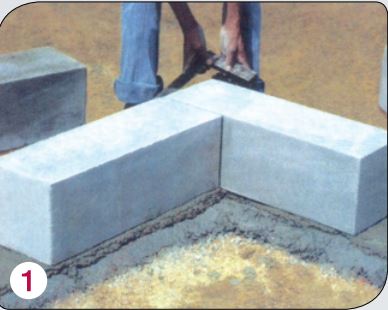
Lay the first course of blocks on conventional mortar to achieve level.
In 10–12 litres of water, slowly add 40 kg of block jointing mortar and mix for 5–10 minutes with a mixer or by hand until a homogeneous, lump‑free paste is achieved; allow to rest for about 5 minutes.
Use within 20–30 minutes for best performance, re‑mixing lightly if needed (without adding extra water).
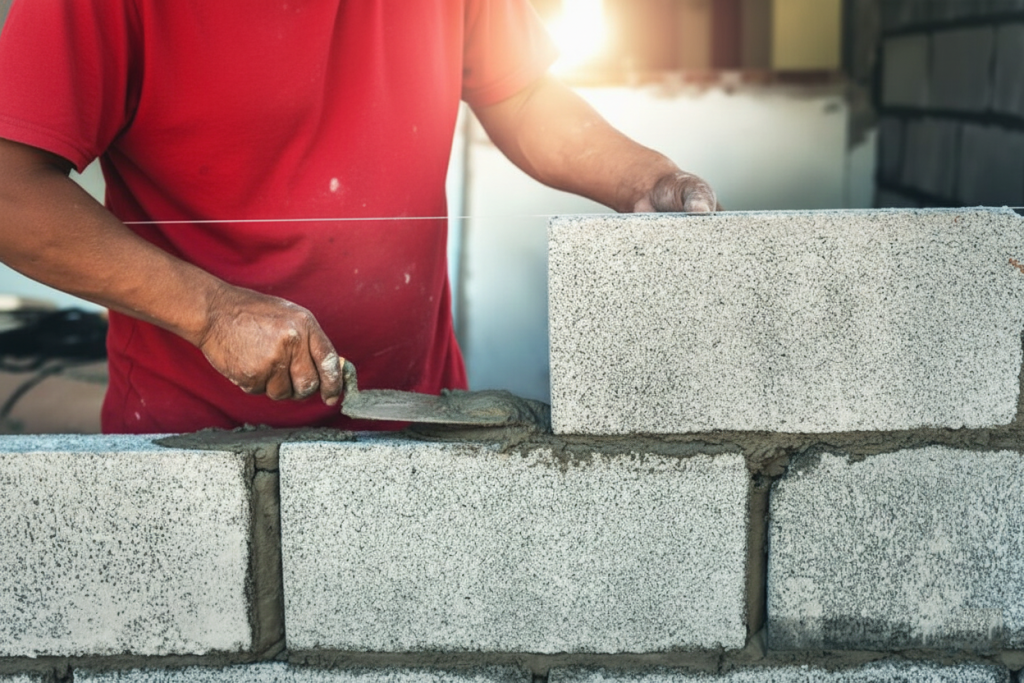
Apply the adhesive in a 2–3 mm layer using a 3–4 mm notched trowel on the bed and side of blocks for full contact and stronger bonding.
Check alignment and level as you go, scraping where necessary to maintain uniform thickness; the thin‑bed system, combined with superbond technology, ensures high‑strength, neat joints and faster wall construction.

ConventionalMortar used for laying the first course of blocks.
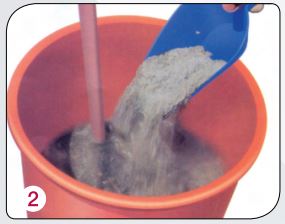
In 10 - 12 | of water, add 40kgs of Block Jointing Mortar. Stir mix continuously for 5 - 10 mins by using electric mixer or by hand to obtain homogeneous lump-free mix.
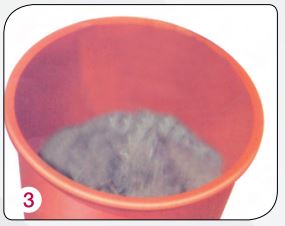
Allow the Resultant Wet Mortar to stand for 5mins for the additive to dissolve. Use the mix within 20-30 mins for best results.
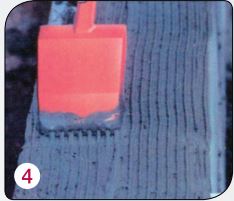
For better coverage, it is advisable to use notch trowel of 3-4 mm, to have good contact and stronger bonding
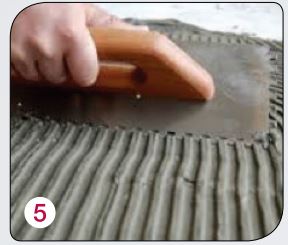
For better coverage, it is advisable to use notch trowel of 3-4 mm, to have good contact and stronger bonding
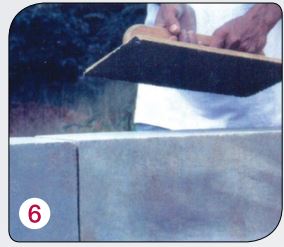
Scrapping to ensure uniformity for Block Jointing Mortar application.
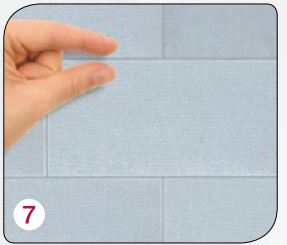
Superbond Technology ensures high strength Thinner Joints.